 020 7760 7660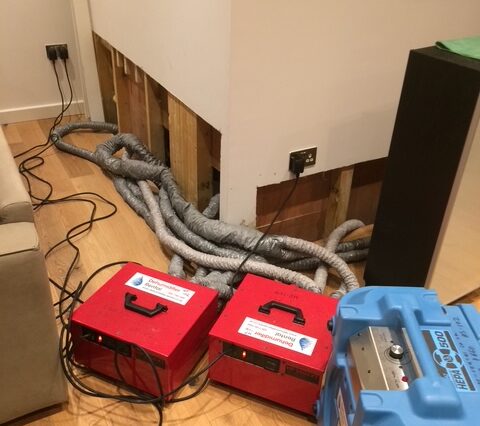
Types of Wall Construction in UK Homes – and How They Affect Damp Problems
When it comes to dealing with damp and leaks in your home, the type of wall construction makes a big difference. Some walls dry out quickly, while others hold on to moisture for weeks, risking mould and structural damage. In this guide, we’ll explain the main types of wall construction in UK homes and how each one responds to water damage.
In simple terms, most properties have a combination of…
- External walls: solid, cavity, or timber frame.
- Internal walls: stud, drywall, or load-bearing masonry.
1. Solid Walls
Older houses (generally built before the 1920s) often have solid brick or stone external walls. These are made from a single thickness of masonry, with no cavity in between.
- Pros: Strong and durable.
- Cons: Easily absorbs rain or leaks when impacted by sustained water soaking, and slow to dry without accelerated drying.
- Damp risk: Water can penetrate from outside and spread through the wall to the inside of the property
Using a dehumidifier and building dryers can speed up drying in solid-walled homes after a leak or flood.
We have undertaken many drying jobs in Victorian Terraces homes in London for example. Typically after persistent rains, gutter and downpipe failures can lead to damp patches showing on walls. Drying work would comprise either dehumidifier together with industrial fan, or a tented drying enclosure over the affected area of damp wall.
2. Cavity Walls
Introduced in the early 20th century, external cavity walls have two “leaves” (an inner and outer layer of brick or block) separated by an air gap. Many modern homes also have insulation within the cavity.
- Pros: The cavity helps reduce damp penetration from the outside wall.
- Cons: If the insulation gets wet, it loses effectiveness and may need replacing.
- Damp risk: Leaks can track into the cavity and spread unseen before appearing indoors.
Dehumidifiers help dry out internal surfaces, however soaked insulation can sometimes require removal. Alternatively we have in the past undertaken injection drying of cavity walls, pressurising the cavity with dry air to force humidity to escape.
3. Stud Walls (Internal Partition Walls)
Inside most homes you’ll find stud walls made from timber or metal frames with plasterboard attached. They’re lightweight and used for dividing rooms.
- Pros: Easy to build and alter.
- Cons: Susceptible to swelling and mould when wet.
- Damp risk: Plasterboard can softens and crumbles when wet; insulation inside may need replacing.
Quick action is essential — fans and dehumidifiers can help, but wet plasterboard often needs to be cut out. Whilst plasterboard can often be dried and then reinstated, it may need to be removed if bowing and misshapen.
In addition, if plasterboard is exposed to water damage over a prolonged period, mould could grow and then the board may need removal & replacement.
4. Load-Bearing Walls
These can be solid brick, blockwork, or reinforced concrete and form part of the home’s main internal and external structure.
- Pros: Very strong and durable.
- Cons: Thick walls can hold hidden moisture for weeks and may need stripping back in order to speed up drying.
- Damp risk: Slow drying, with a risk of surface mould.
Hiring an industrial dehumidifier is recommended for load-bearing masonry walls after a flood or burst pipe. Often if the affected section of wall is a small proportion of area within a room, we may use a tented drying enclosure to focus the dry air where needed.
5. Timber Frame Walls
Common in modern extensions and new builds, timber frame construction uses insulated wooden panels with brick, render, or cladding on the outside.
- Pros: Excellent insulation and energy efficiency.
- Cons: Very vulnerable to water damage.
- Damp risk: Timber can rot if not dried quickly and thoroughly.
Dehumidifier rental is essential here to protect both the structure and the insulation. It’s possible that the internal finish of the wall may need cutting open (or removal) to remove saturated insulation. Also notable that injection drying is a possibility with timber frame walls – cutting holes into the numerous timber sections will allow pressurising of the internal voids with dry air.
Summary
If your home has suffered a leak or flood, understanding your wall construction will help you respond quickly and effectively. In almost every case, hiring an industrial- capacity dehumidifier is the most reliable way to dry out walls, prevent mould, and protect your property from long-term damage.
Call us for advice with building drying and dehumidifier hire in London and the Home Counties, on 020 7760 7660.